



Geofencing: how to integrate it into your omnichannel customer engagement strategy?
5 March 2025
Geofencing: how to integrate it into your omnichannel customer engagement strategy?
Geofencing is radically transforming the digital marketing landscape. This innovative technology allows businesses to create personalized, location-based customer experiences, offering new opportunities to engage consumers in contextual and relevant ways. In this article, we'll explore how to effectively integrate geofencing into your omnichannel customer engagement strategy, its benefits, best practices to adopt, and how to measure its impact to optimize your campaigns.
Understanding geofencing in the context of customer engagement
Defining geofencing for beginners
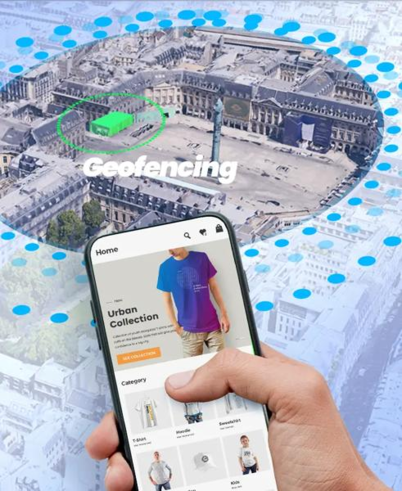
Geofencing is a proximity marketing technique that's revolutionizing how businesses interact with their customers. This technology uses GPS, RFID, Wi-Fi, or cellular data to create a virtual geographic boundary. When a mobile device crosses this invisible line, whether entering or exiting the defined area, a specific marketing action is triggered. This ability to react in real-time to consumer movements opens up new perspectives for digital marketing strategies.
The role of geofencing in omnichannel orchestration
Integrating geofencing into an omnichannel customer engagement strategy adds an extra dimension to the customer experience. It allows brands to personalize their messages in real-time, considering not only customer preferences but also their exact location. This technology creates a tangible bridge between the digital and physical worlds, enabling businesses to interact with their customers consistently, regardless of the channel used.
Moreover, geofencing significantly improves customer engagement by offering contextual and relevant interactions. For example, a customer passing near a store could receive a personalized offer on their smartphone, encouraging them to enter and discover products. This approach not only stimulates sales but also enriches the customer experience by making it more immersive and interactive.
Finally, using geofencing allows businesses to collect valuable data on consumer behavior. When analyzed and leveraged judiciously, this information can fuel broader marketing strategies and contribute to a better understanding of customer habits and preferences.
The benefits of geofencing for customer engagement
Advanced message personalization
Geofencing offers advanced personalization that goes well beyond traditional segmentation techniques. By taking into account the customer's geographic context, brands can tailor their messages with unparalleled precision. For instance, a restaurant chain could send different promotions depending on whether the customer is in a business district at lunchtime or in a residential area in the evening.
The precise timing allowed by this technology is another major asset. Messages can be delivered at the exact moment when they're most likely to have an impact, such as when a customer approaches a point of sale or leaves a commercial area. This ability to communicate at the right time significantly increases the chances of conversion.
Additionally, the content of messages can be dynamically adapted to the local environment. Information about weather, local events, or even road traffic can be integrated in real-time, making each communication more relevant and engaging for the recipient.
Improving real-time customer engagement
Geofencing allows businesses to interact with their customers instantaneously. This technology enables immediate response to consumer movements, creating unique engagement opportunities. For example, when a customer enters a geofenced area around a store, they can receive a notification informing them of ongoing promotions or new products available.
This increased reactivity also paves the way for innovative location-based cross-selling strategies. Imagine a customer who just bought a smartphone in an electronics store. Upon leaving the area, they could receive an offer for complementary accessories available at a nearby partner store. This approach not only increases the chances of additional sales but also enriches the customer's shopping experience by offering relevant products at the opportune moment.
Encouraging immediate action is another major advantage of geofencing. By creating a sense of urgency or exclusivity linked to location, brands can motivate consumers to act quickly. A time-limited offer, activated only when the customer is near the point of sale, can be a powerful trigger for impulse purchases.
Strengthening omnichannel consistency
Geofencing facilitates the creation of a truly omnichannel customer experience. It allows for seamless integration between online and offline channels, blurring the boundaries between digital and physical. For example, a customer who viewed a product online could receive a personalized notification when passing near a store where this product is available, inviting them to come see and try it.
This technology also contributes to creating seamless experiences for the consumer. A customer who made an online purchase for in-store pickup could receive precise navigation instructions when approaching the pickup point, making the process smoother and more enjoyable.
Finally, using geofencing significantly enriches customer profiles with valuable location data. This information can be used to refine segmentation, further personalize future communications, and improve overall understanding of consumer behavior.
Measurability and optimization
One of the major strengths of geofencing lies in its ability to provide measurable and actionable data. This technology allows for precise attribution of conversions, directly linking store visits to geofencing campaigns. Marketers can thus accurately evaluate the return on investment of their location-based initiatives.
Geofencing also offers the possibility to conduct geolocated A/B tests. Businesses can experiment with different messages, offers, or sizes of geofenced areas in different locations, thus refining their approach to maximize campaign effectiveness.
Lastly, this technology provides valuable behavioral insights into consumer travel habits and preferences. This data can be used to optimize not only future geofencing campaigns but also the company's overall marketing strategy.
Setting up a geofencing campaign: the basics
Defining customer engagement objectives
Before diving into geofencing, you need to clearly define your objectives. These can range from increasing in-store traffic to improving customer engagement, to boosting online sales. For example, a retail chain might aim to increase store visits by 20% following the sending of geolocated notifications. It's important that these objectives are SMART: Specific, Measurable, Achievable, Relevant, and Time-bound.
Selecting and configuring geographic areas
The choice and configuration of geofencing zones can make or break your campaign. The size of the zone must be carefully studied: too large, it dilutes the effectiveness of your messages; too small, it limits your reach. You also need to identify the most relevant strategic locations for your target audience, whether it's your own stores, those of your competitors, or high-traffic areas.
Creating relevant and personalized messages
The relevance and personalization of messages are essential to maximize the impact of your geofencing campaign. Each communication must be carefully designed to resonate with the local context and specific customer needs. For example, a coffee chain could send a message offering a refreshing drink on a hot day, or a hot coffee in cold weather.
It's important to include a clear and location-specific call-to-action (CTA). A message like "Enter now and get 20% off your purchase" can be very effective for a customer in the immediate vicinity of your store. Don't forget to create a sense of urgency or exclusivity (FOMO effect) to encourage immediate action.
Choosing technology and tools
Selecting the appropriate tools and technologies greatly contributes to the success of your geofencing campaign. A robust and versatile customer engagement platform is essential for effectively orchestrating your omnichannel marketing campaigns. Although not all platforms natively offer geofencing features, many solutions allow integration of third-party services specialized in this area. This is the case with Notificare, recently acquired by Actito, which offers advanced geofencing capabilities and integrates perfectly into a broader marketing ecosystem.
Don't forget to include analytics tools in your technological arsenal. These tools will allow you to measure the effectiveness of your campaigns and gain valuable insights for continuous optimization of your strategy.
Best practices for an ethical customer engagement strategy
Respecting consumer privacy
Today, respecting consumer privacy is paramount, especially when it comes to location-based technologies like geofencing. You have a duty of transparency regarding the collection and use of location data. Your privacy policy should clearly explain how and why you use geofencing.
Always offer users full control over their location settings. They should be able to easily activate or deactivate tracking of their position, as well as opt out of location-based communications if they wish. This respectful approach strengthens consumer trust in your brand.
Obtaining and managing consent
Consent is the cornerstone of any location-based marketing strategy. Make sure to obtain clear and explicit consent from users before using their location data for marketing purposes. This consent must be freely given, specific, informed, and unambiguous.
Facilitate the process of withdrawing consent. Users should be able to revoke their authorization as easily as they gave it. Also consider periodically asking users to renew their consent. This practice not only maintains trust but also ensures that your communications remain desired and relevant to your audience.
Balancing message frequency and relevance
Finding the right balance between engagement and over-solicitation is key to the success of your geofencing campaigns. Avoid bombarding users with messages every time they enter a geofenced area. Set reasonable limits on the frequency of communications to avoid customer fatigue or irritation.
Ensure that each message triggered by geofencing brings real value to the user in their current context. A relevant message with good timing will be much better received than a generic one. Take into account your customers' communication preferences and scrupulously respect them.
Measuring the impact of geofencing in your omnichannel strategy
Geofencing-specific KPIs
To effectively evaluate the impact of your geofencing campaigns, you need to track specific key performance indicators (KPIs). The entry rate into the geofenced area, the engagement rate with your messages, and the in-store conversion rate are metrics to monitor.
Also analyze the average time spent in-store by customers targeted by geofencing, as well as the frequency of their visits. This data can reveal the effectiveness of your campaigns in stimulating not only visits but also long-term engagement with your brand.
Integrating geofencing data into your global analyses
For a comprehensive overview of the effectiveness of your omnichannel strategy, you need to integrate geofencing data into your other marketing analyses. Include geofencing interactions in your multi-touch attribution models to understand their role in the overall customer purchase journey.
Use this data to refine your customer segmentation and further personalize your communications across all channels. Integrating geofencing touchpoints into your customer journey mapping will help you identify key moments where this technology has the most impact, allowing you to continuously optimize your omnichannel customer engagement strategy.
Challenges and considerations in measuring geofencing
Location accuracy
One of the main challenges of geofencing lies in location accuracy. GPS technology can sometimes lack precision, especially in dense urban areas where tall buildings can interfere with signals. It's important to take this margin of error into account in your analyses and in the configuration of your geofenced areas. One solution can be to use a combination of technologies, such as GPS, Wi-Fi, and Bluetooth beacons, to improve accuracy.
Complex attribution
Attributing conversions to geofencing campaigns can be complex, particularly in an omnichannel context. A customer may have been exposed to multiple marketing touchpoints before making a purchase, of which geofencing is just one element. It's therefore necessary to use sophisticated attribution models that take into account the entire customer journey to get a more accurate view of the impact of geofencing.
Future innovations in geofencing
Artificial intelligence and machine learning
The future of geofencing is closely tied to advances in artificial intelligence (AI) and machine learning. These technologies will allow for even more advanced personalization of messages, predicting consumer behaviors and adapting communications in real-time. For example, AI could analyze a customer's travel habits to anticipate their needs and send them relevant offers even before they enter a geofenced area.
Integration with the Internet of Things (IoT)
The integration of geofencing with the Internet of Things opens up exciting new possibilities. Imagine a scenario where your connected refrigerator detects that you're running low on milk and sends you a notification when you pass near a supermarket. This synergy between geofencing and IoT allows brands to interact with their customers, creating truly contextual and useful experiences.
Key learnings
Geofencing represents a major advancement in the field of customer engagement, offering brands the ability to create highly personalized and contextual customer experiences. This technology plays a prominent role in creating a coherent omnichannel strategy, bridging the gap between digital and physical.
However, its effective use requires a delicate balance between personalization and respect for privacy. Brands must ensure they bring real value to each interaction while scrupulously respecting consumer preferences and confidentiality.
The future of geofencing is promising, with innovations like AI and IoT that will further extend its possibilities. To succeed, companies will need to judiciously integrate this technology into their overall strategy, relying on robust platforms like Actito.
Ultimately, geofencing is not just a simple technology, but a means of creating meaningful connections with your customers, at the right time and in the right place. Used intelligently, it can transform each interaction into an opportunity to strengthen customer engagement and loyalty, thus stimulating your business growth.
To go further in your customer engagement strategy, don't hesitate to request a demo of Actito. Our experts will guide you in integrating geofencing and other cutting-edge technologies to optimize your omnichannel marketing campaigns.