



How to create an effective newsletter: The complete guide
8 October 2024
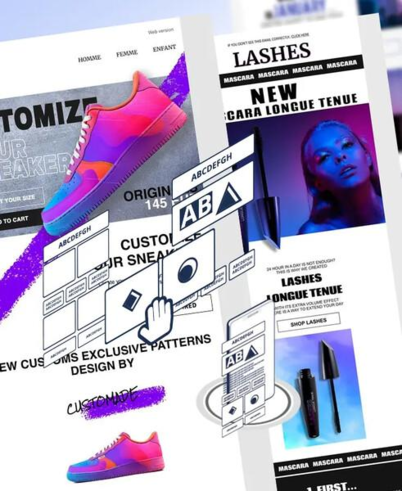
How to create an effective newsletter: The complete guide
The newsletter has become an essential tool in the marketing arsenal of companies, whether they operate in B2B or B2C. Much more than a simple email, it represents a unique opportunity to create a special connection with your audience, build customer loyalty, and generate sales on a regular basis. In this article, we will guide you step by step to design a newsletter that will not only reach its target, but will become a real anticipated rendezvous for your subscribers.
In this comprehensive guide, we'll explore why the newsletter is crucial to your marketing strategy, how it can be beneficial in both B2B and B2C, and what the key elements are for creating a high-performing newsletter. We'll also see how modern tools can greatly simplify the creation process, from using a DAM (Digital Asset Management) for image management to integrating AI for content generation.
Whether you're a beginner in the field of email marketing or a seasoned professional looking to refine your strategy, this guide will provide you with the keys to transforming your newsletter into a powerful communication and conversion tool.
Let's discover together the secrets of an effective newsletter and how to judiciously integrate it into your overall marketing strategy.
Why the newsletter is important for your marketing strategy?
The newsletter is much more than a simple communication tool: it's a real pillar of your digital marketing strategy. Here's why it has become essential for businesses of all sizes:
1. A direct and personalized communication channel
The newsletter allows you to establish direct contact with your audience. Unlike social networks where your messages can be drowned in a continuous flow of information, the email arrives directly in your subscribers' inbox. This proximity offers a unique opportunity to personalize your communication and create a more intimate relationship with your readers.
2. A powerful loyalty tool
By regularly providing valuable content to your subscribers, you strengthen their engagement with your brand. A well-designed newsletter can become an anticipated rendezvous, thus helping to build customer loyalty over the long term.
3. A source of qualified traffic
Each newsletter send is an opportunity to generate traffic to your website. The links included in your emails direct your readers to specific pages, whether blog articles, product pages, or special offers. This traffic is generally highly qualified, as it comes from people already interested in your brand.
4. An excellent return on investment
Email marketing, of which the newsletter is a part, offers one of the best returns on investment among all marketing channels. According to a DMA study, for every euro invested in email marketing, the average return is 38 euros.
5. A precise measurement tool
The analytics tools associated with newsletters allow you to accurately track the performance of your campaigns. You can measure open rates, click-through rates, conversion rates, and adjust your strategy accordingly. This ability to finely measure results is a major asset for optimizing your marketing actions.
6. A way to stay present with your customers
The newsletter allows you to maintain a regular presence with your audience. Consumer attention is highly solicited today, and it is crucial to remain visible. Even if not all your emails are opened, regularly appearing in the inbox helps reinforce your brand awareness and maintain the connection with your customers.
By integrating the newsletter into your multi-channel marketing strategy, you create a coherent ecosystem where each channel mutually reinforces the others. The newsletter thus becomes a central element of your communication, complementary to your actions on social networks, your website, and your other marketing channels.
The usefulness of the newsletter in B2B and B2C
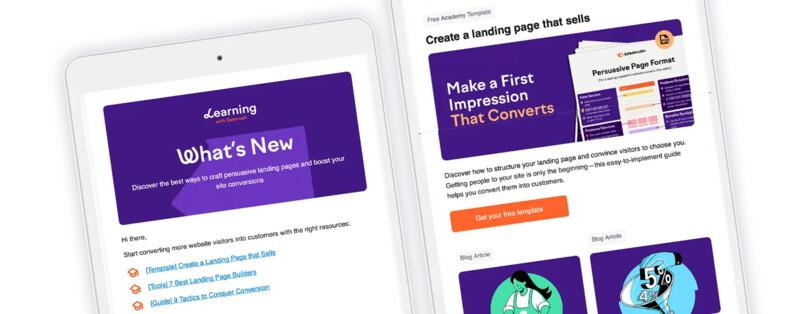
The newsletter is a versatile tool that adapts to both B2B (Business-to-Business) and B2C (Business-to-Consumer) strategies. Although the objectives and approaches may differ, its effectiveness remains undeniable in both contexts.
The newsletter in B2B
In the B2B sector, the newsletter plays a crucial role in building lasting professional relationships and positioning as an expert. Here's how it can be particularly useful:
- Sharing expertise: B2B newsletters are often focused on sharing in-depth industry knowledge. They can include market analyses, case studies, or substantive articles, thus positioning the company as a thought leader.
- Lead nurturing: The customer activation strategy is essential in B2B. The newsletter allows you to nurture prospects over the long term, regularly providing them with relevant information until they are ready to make a purchase decision.
- Product/service education: With B2B sales cycles generally being longer, the newsletter offers the opportunity to gradually educate prospects about the solutions offered.
- Strengthening customer relationships: Beyond acquisition, the B2B newsletter is an excellent tool for retaining existing customers by keeping them informed of new developments, product updates, or upcoming events.
The newsletter in B2C
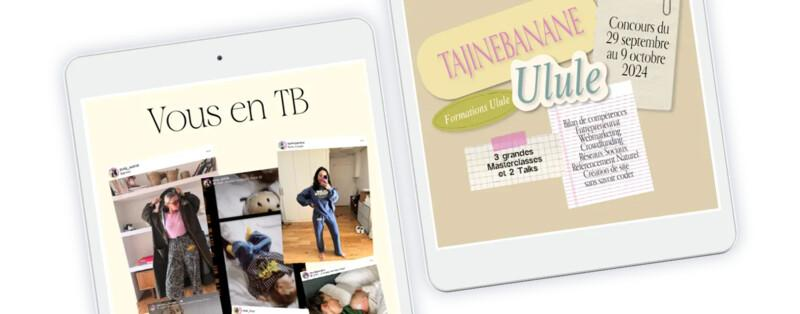
In the B2C context, the newsletter is a powerful lever for boosting sales and creating an emotional connection with consumers. Its usefulness manifests in several ways:
- Product promotion: B2C newsletters are ideal for showcasing new products, special offers, or flash sales, directly encouraging purchases.
- Personalization of the customer experience: Thanks to segmentation, B2C companies can send highly personalized content, based on consumer preferences and purchase history.
- Community engagement: The newsletter can be used to share brand stories, customer testimonials, or user-generated content, thus reinforcing the feeling of belonging to a community.
- Reactivation of inactive customers: Targeted campaigns can be sent to customers who haven't made a purchase for some time, encouraging them to return.
Commonalities and differences
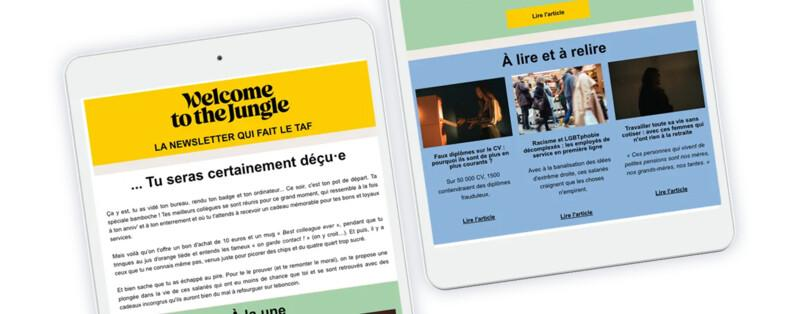
Whether in B2B or B2C, the newsletter shares certain common objectives:
- Maintaining regular contact with the audience
- Reinforcing brand awareness
- Generating traffic to the website or e-commerce platform
The main differences lie in:
- The tone and style of communication (more formal in B2B, more casual in B2C)
- The sending frequency (often less frequent in B2B)
- The type of content shared (more technical and in-depth in B2B, more lifestyle and promotion-oriented in B2C)
By understanding these nuances, you can adapt your newsletter strategy to be perfectly aligned with your audience, whether it's composed of professionals or end consumers. The key is to always keep in mind the value you bring to your readers, as that's what will encourage them to open, read, and interact with your emails regularly.
The key elements of a good newsletter
1. Define your objectives and strategy
Before launching into the creation of your newsletter, it is essential to clearly define your objectives. Whether it's to increase sales of certain products, improve audience engagement, position your brand as an expert in your field, or retain existing customers, your objectives will guide your entire strategy. Once these objectives are defined, develop a strategy that will guide the content, frequency, and tone of your newsletters. This structured approach will allow you to maintain consistency in your communications and more easily evaluate the effectiveness of your campaigns.
2. Build and segment your contact list
The quality of your subscriber list is paramount to the success of your newsletter. Focus on building an organic list of contacts genuinely interested in your content. To do this, offer attractive incentives for signing up, such as exclusive content or special promotions. Use clear and simple sign-up forms on your website. Once your list is built, segment it based on relevant criteria such as purchase behavior, interests, or demographic data. This segmentation will allow you to personalize your sends and increase their relevance for each group of subscribers.
3. Choose the right email tool
A high-performance email tool is essential for effectively managing your campaigns. Look for a solution that offers customizable templates, advanced segmentation features, detailed analytics tools, and good deliverability. For example, Actito offers a comprehensive platform that meets these criteria and adapts to both B2B and B2C needs. The right tool will allow you to not only create visually appealing newsletters, but also efficiently manage your contact list and analyze your campaign performance.
4. The importance of copywriting
The content of your newsletter is crucial to its success. Effective copywriting starts with writing catchy subject lines that make you want to open the email. In the body of the message, get straight to the point: your readers have little time, so it's essential to capture their attention from the first lines. Use clear, concise language that's appropriate for your audience. Structure your content logically, with headings and subheadings that facilitate reading. Don't forget to include clear and compelling calls to action to guide your readers to the desired actions.
5. Design and layout
The appearance of your newsletter is just as important as its content. Opt for a clear and airy layout that naturally guides the reader's eye through your content. Use colors consistent with your brand identity and choose readable fonts. Integrate relevant visuals to illustrate your points, but use them sparingly so as not to weigh down the email. Make sure your newsletter displays correctly on all types of devices, especially on mobile where more and more emails are viewed. A responsive design is therefore essential.
6. Personalization and relevance
Personalization goes far beyond inserting the recipient's first name in the subject line or body of the email. It's about adapting the content based on the interests and behavior of each segment of your audience. This can include sending product recommendations based on purchase history, or adjusting the tone and style according to the relationship with the recipient. The more relevant and personalized your content is, the more engaged and receptive your subscribers will be to your messages.
7. Compliance with legal rules
Don't forget the importance of complying with legal rules in your newsletter strategy. Comply with applicable regulations, particularly the GDPR in Europe. Obtain explicit consent from your subscribers before adding them to your mailing list. Systematically include an easy-to-find unsubscribe link in each email. Avoid buying email lists, a practice that is not only illegal in many countries, but also ineffective in terms of marketing. These practices not only protect you legally, but also contribute to building a relationship of trust with your subscribers.
How to simplify the creation of your newsletter with the right tools
Creating an effective newsletter may seem complex, but modern tools have greatly simplified this process. Here's how to leverage these technologies to optimize your workflow and produce quality newsletters.
Drag and drop editors
Drag and drop editors have democratized the creation of visually appealing newsletters. These tools offer several advantages:
They allow you to design professional newsletters without HTML coding knowledge, making the process accessible to all team members.
The real-time visualization of your design facilitates adjustments and ensures that the final result meets your expectations.
Most drag and drop editors offer responsive templates, ensuring that your newsletter will display correctly on all devices.
By using an intuitive editor like the one offered by Actito, you can quickly create personalized newsletters that are visually consistent with your brand image.
RSS feed integration
The use of RSS feeds can greatly facilitate content curation for your newsletters. By integrating RSS feeds into your email tool, you can:
Automate the inclusion of your latest blog posts or news in your newsletter, thus ensuring fresh and relevant content.
Diversify your content by including reliable external sources, thus positioning your brand as an aggregator of valuable information in your industry.
Save time on content research and selection, allowing you to focus more on personalization and analysis of your campaigns.
This approach is particularly effective for regular newsletters, such as weekly or monthly summaries, where content freshness is paramount.
Using a DAM for image management
A Digital Asset Management (DAM) is a valuable tool for organizing and quickly accessing your visual resources. By centralizing your images, logos, and other graphic elements, a DAM allows you to:
Save time by easily finding the visuals you need for each newsletter. This is especially useful when working on themed or seasonal campaigns.
Maintain the consistency of your brand image by ensuring that all team members use the correct versions of the visual elements.
Automatically optimize images for email sending, thus reducing loading time and improving the reading experience for your subscribers.
AI for subject line generation
Artificial intelligence is revolutionizing many aspects of digital marketing, including newsletter creation. In terms of writing email subject lines, AI can:
Quickly generate multiple subject line variants based on the content of your newsletter, offering you a wide choice of options to test.
Analyze the past performance of your campaigns to suggest wordings likely to improve your open rates.
Personalize subject lines based on the preferences and behavior of each segment of your audience, thus increasing the relevance of your communications.
Although AI does not replace human creativity, it can serve as an excellent starting point or complementary tool for optimizing your email subject lines.
Create an effective editorial calendar
A well-structured editorial calendar is the key to a consistent and high-performing newsletter strategy. It allows you to plan your content in advance, ensure regularity in your sends, and maintain a balance between the different types of content you share. Here's how to set up and effectively use an editorial calendar for your newsletters.
Define the sending frequency
The first step is to determine how often you will send your newsletters. This decision depends on several factors, including your industry, your resources, and the expectations of your audience. Too high a frequency can tire your subscribers, while too low a frequency can make you forgotten.
For most companies, a weekly or biweekly newsletter is a good starting point. This allows you to stay present in the minds of your subscribers without overwhelming them with information.
Plan your themes
Once the frequency is established, define the themes you will cover in your newsletters. Create a balanced mix between informative content related to your industry, product or service highlights, company news, promotional offers (without overdoing it), and engaging content such as surveys or contests.
Be sure to vary the topics to maintain your readers' interest. For example, you can create thematic series that span several newsletters, thus creating anticipation among your subscribers.
Anticipate key events
Integrate important events in your industry, holidays, and seasons into your calendar. This will allow you to prepare relevant and timely content. For example, if you are in e-commerce, plan special newsletters for periods like Black Friday, Christmas, or sales.
Don't forget to also include events specific to your company, such as product launches, brand anniversaries, or participation in trade shows.
Use a planning tool
To effectively manage your editorial calendar, use a planning tool. This can be as simple as a shared spreadsheet or a more sophisticated project management tool. The important thing is that your entire team can access and update it easily.
Stay flexible
Although it's important to plan ahead, keep some flexibility in your calendar. Current events can sometimes offer opportunities for relevant content that you hadn't anticipated. Reserve a few slots in your planning for last-minute content or adjustments based on your industry's news.
Analyze and adjust
Use performance data from your previous newsletters to refine your editorial calendar. Identify the types of content that generate the most engagement and adjust your planning accordingly. Don't hesitate to experiment with different formats or themes and analyze the results to continually optimize your strategy.
Transform your newsletter into a reading ritual for your subscribers
For a newsletter to become truly effective, it must go beyond the simple status of a promotional email and become an anticipated rendezvous for your subscribers. Here's how to create this special bond and make your newsletter a real reading ritual.
Establish regularity
Consistency is the key to creating a habit among your readers. Choose a specific day and time for sending your newsletter and stick to this schedule. Whether it's every Monday morning or the first Thursday of the month, your subscribers will know when to expect your content. This regularity helps build a relationship of trust and anticipation with your audience.
Offer constant added value
Each edition of your newsletter should bring real value to your readers. This can take different forms:
- Exclusive information about your industry
- Practical and immediately applicable advice
- In-depth analyses of current trends
- Offers or content reserved for subscribers
The goal is for your readers to always have something to learn or gain by opening your email.
Create a unique identity
Give your newsletter a distinct personality that reflects your brand while standing out from your other communications. This can include a catchy name for your newsletter, a specific and consistent writing style, recurring sections that readers will learn to know and appreciate, and a recognizable but evolving design to maintain visual interest.
Encourage interaction
Transform your newsletter from a monologue into a dialogue. Encourage your readers to interact with your content by asking questions, including polls or mini-quizzes, inviting readers to share their opinions or experiences, and highlighting subscriber contributions in subsequent editions.
Personalize the experience
Use the data you have to personalize the content of your newsletter according to the interests and behavior of each subscriber. The more relevant the content is to the reader, the more likely they are to make it a regular read.
Evolve with your audience
Stay tuned to your subscribers' feedback and don't hesitate to evolve your newsletter according to their needs and preferences. Regularly conduct surveys to understand what they appreciate most and what they would like to see changed.
Reward loyalty
Show your long-time subscribers that you value their loyalty. Offer themexclusive benefits, such as early access to certain content or special offers reserved for the most senior members.
Measure and analyze the performance of your newsletter
To ensure that your newsletter strategy is achieving its objectives and continues to improve, it is essential to regularly measure and analyze its performance. This step will allow you to identify what is working well and what needs adjustments. Here are the main aspects to consider:
Key performance indicators (KPIs) to track
- Open rate: This rate indicates the percentage of recipients who opened your email. A good open rate is generally between 15% and 25%, but this can vary depending on your industry.
- Click-through rate: It measures the percentage of readers who clicked on at least one link in your newsletter. A click-through rate between 2% and 5% is considered satisfactory.
- Conversion rate: This rate represents the percentage of readers who took the desired action (purchase, registration, download, etc.) after clicking on a link in your newsletter.
- Unsubscribe rate: It indicates the percentage of subscribers who unsubscribe after receiving your newsletter. A rate below 0.5% is generally considered acceptable.
- Bounce rate: This rate measures the percentage of emails that could not be delivered. A high bounce rate may indicate problems with your subscriber list or your sender reputation.
Analysis tools
Most email platforms, like Actito, offer integrated analytics tools that allow you to track these KPIs. Use these tools to generate regular reports and track the evolution of your performance over time.
Interpreting the data
Analyzing this data will help you understand what interests your audience the most, identify the best times to send your newsletters, determine which types of content generate the most engagement, and spot the segments of your audience that are the most receptive.
A/B testing
A/B testing is an excellent way to refine your strategy. Test different elements of your newsletter, such as email subject lines, send times, designs and layouts, content types, and calls to action (CTA). By comparing the performance of different versions, you can identify what works best for your audience.
Adjust your strategy
Use the insights from your analyses to continually adjust your strategy. If certain types of content consistently generate more engagement, increase their frequency. Adapt your send times based on when your open rates are highest. Refine your segmentation to send more targeted content to different groups of subscribers. Improve your email subject lines based on those that have obtained the best open rates.
Monitor long-term trends
Beyond the individual performance of each newsletter, observe trends over the long term. This will help you identify seasonal variations in your audience's engagement, the evolution of your subscribers' preferences over time, and the impact of major changes in your content or design strategy.
Benchmarking
Compare your performance with industry averages. This will give you an idea of your position relative to your competitors and help you set realistic goals for improving your performance.
Key learnings
Creating an effective newsletter is a process that requires reflection, creativity, and constant analysis. By following the steps described in this article - from defining your objectives to analyzing performance, through creating engaging content and optimizing design - you have all the tools at hand to develop a high-performing newsletter strategy.
Remember that the key to success lies in the value you bring to your subscribers. By staying tuned to their feedback and continually adapting your approach, your newsletter will become not only a powerful marketing tool, but also a valuable resource for your audience.
Whether you are in B2B or B2C, a well-designed newsletter can significantly strengthen your customer relationship and contribute to the growth of your business. So get started, experiment, and see for yourself the positive impact a quality newsletter can have on your overall marketing strategy.