



Marketing scenarios: the key to an optimized customer journey
10 November 2020
Scénarios marketing : la clé pour un parcours client optimisé
Marketing automation has become essential for optimizing the customer journey and delivering personalized experiences at scale. At the heart of this approach: marketing automation scenarios.
These pre-programmed message sequences allow you to interact with your customers at the right time, with the right content, and through the right channel. The benefits are numerous: time savings, communication consistency, improved responsiveness, etc.
Discover in this article 8 essential marketing automation scenarios and our advice on how to deploy them effectively.
1. The welcome scenario: creating a memorable first impression
Imagine a new visitor discovering your website for the first time. Your content catches their attention, your offer interests them, and they decide to sign up for your newsletter to stay informed. It's a big step! By entrusting you with their email address and other information, this visitor opens the doors to their inbox and grants you their trust. So, how will you honor this?
There's a well-known marketing automation scenario for this: the welcome scenario. This scenario is your chance to make a memorable first impression, to show your new subscriber that they made the right choice.
A successful welcome message is the beginning of a beautiful story!
Here are some tips for a successful welcome scenario:
- Adopt a warm and personalized tone to create an emotional connection.
- Confirm the subscription and remind them of the benefits of your newsletter.
- Give a preview of upcoming content to spark interest and anticipation.
- Invite them to visit a specific page to encourage engagement.
- Surprise them with an exclusive welcome gift (guide, discount...).
2. The birthday scenario: personalizing the customer experience
Each customer is unique, so why not celebrate them? The birthday scenario is an opportunity to show your customers that you know and appreciate them. It's the moment to make them feel that they're not just a number in your database, but a person who matters to you.
Wishing a happy birthday creates a moment of surprise and pleasure that strengthens the emotional bond.
But beyond a simple message, the birthday scenario allows you to truly personalize the experience, adapting your communication and offer to each individual.
It's the opportunity to remind them of their journey with you, highlight your shared history, and reward them for their loyalty. A customer who feels recognized and valued will be more inclined to continue the relationship!
Here are some tips for a successful birthday scenario:
- Use customer data (starting with the first name) to personalize the message.
- Mention key moments in the customer journey to reinforce proximity.
- Offer an exclusive benefit (discount, gift...) to mark the occasion.
- Suggest products or content tailored to individual preferences to encourage conversion.
3. The nurturing scenario: cultivating relationships with your prospects
The nurturing scenario is a great opportunity to show your subscribers that you're not just there to send commercial communications. Here, you're reaching out to build a relationship of trust in which they indeed have a say.
This scenario aims to build loyalty with your new subscriber: taking care of them, ensuring that you act according to their customer journey. We're in a phase of attention marketing where you can thank your subscriber for the interest they show in your brand, but also gather their opinion and suggestions.
Obviously, targeting plays an important role in the nurturing scenario:
- No need to contact your new subscriber who has never bought anything from you.
- No need to reach out to dissatisfied customers who returned their purchase as soon as they received it.
- However, you certainly want to know what prompted these customers to return the purchased item and ensure that the return process was optimal, efficient, and met their expectations.
In any case, while it's possible to contact all your profiles with the right message, dissatisfied customers are not included in the nurturing scenario we're discussing here. So be sure to think about the objective of your scenario upfront: this will help you establish your targeting.
To succeed with your nurturing scenario, here are some essential elements to incorporate:
- Offer educational and informative content related to your products or services.
- Share customer testimonials or case studies to reinforce credibility.
- Invite your prospects to webinars or events to deepen their knowledge.
- Offer exclusive resources (guides, ebooks, templates) in exchange for more information.
- Regularly solicit their feedback to improve your offer and communication.
4. The abandoned cart scenario: recovering lost sales
You know this frustration if you're in e-commerce: a potential customer adds products to their cart, starts the ordering process... but abandons it midway. So close to the goal...
But don't give up! With a well-crafted follow-up scenario, you have a real chance of winning back these undecided buyers.
The stakes are high when we know that a little over 70% of carts are abandoned on average. The abandoned cart scenario allows you to react quickly, reopen dialogue with these "almost customers" prospects, and gently bring them back to conversion.
It's an opportunity to understand what blocked them, address their objections, and reassure them to convince them to take the plunge.
Some tips for an effective abandoned cart scenario:
- Personalize the message with cart details to remind them of the context.
- Adopt an empathetic and reassuring tone to understand the barriers.
- Remind them of the benefits of your products and offer to convince.
- Address potential objections (shipping costs, delivery time, payment...) to facilitate the purchase.
- Create a sense of urgency (limited stock, time-limited offer...) to accelerate the decision.
5. The post-purchase scenario: strengthening customer satisfaction
The transaction is complete... but your customer relationship is just beginning! The after-sales period is a key moment to consolidate buyer satisfaction and lay the foundations for a lasting relationship.
Too often, brands consider their work done once the order is shipped. Big mistake! Your customers need you more than ever at this point.
Whether it's to get usage advice, track their package, resolve a potential problem, or share their opinion, your buyers expect real personalized follow-up.
The post-purchase scenario is there to address this. It's the opportunity to accompany them, guide them, listen to them to ensure their experience is optimal from start to finish. A well-pampered customer after their purchase will be more likely to return and recommend.
Here are some ideas to succeed with this scenario:
- Confirm the order with practical details (number, delivery date...).
- Offer content to help with getting started (guides, tutorials, FAQ...).
- Invite them to share a review or feedback.
- Suggest complementary products or from the same range to extend the experience.
- Reward the first purchase (welcome offer, loyalty program...) to encourage repurchase.
6. The upsell/cross-sell scenario: maximizing customer value
You've succeeded in converting a visitor into a buyer, congratulations! But do you know that the potential of this relationship is just beginning? Your existing customers are your greatest treasure: selling to an existing customer is much less costly than acquiring a new one.
This is where upsell and cross-sell scenarios come into play. Their goal? Increase the value of each customer by offering relevant additions.
Concretely, upselling consists of suggesting a superior version or additional options for a product that the customer owns or is about to buy. Cross-selling, on the other hand, proposes related products to enrich usage.
Let's take an example: if your customer bought a coffee maker, upselling would be to offer them the latest, more advanced model, and cross-selling would be to suggest accessories like cups or coffee.
When used well, these marketing automation scenarios boost the average basket size and customer profitability!
To succeed with your upsell/cross-sell scenarios, here are some tips:
- Personalize suggestions based on the customer's history and preferences.
- Clearly explain the benefit of upgrading or additional products.
- Integrate recommendations seamlessly into the purchase journey (product page, cart...).
- Play on the complementarity and coherence of offers for more relevance.
7. The retention/loyalty scenario: cultivating customer loyalty
In a world where competition is fierce and consumers are volatile, loyalty is a rare and precious commodity. Your customers are courted from all sides, so how do you keep them in your fold?
This is the whole point of retention and customer loyalty scenarios: cultivating a privileged relationship so that your customers no longer want to look elsewhere.
Building loyalty means making your customers feel so good with you that they want to come back. It's about creating a lasting preference by always bringing them more value.
To do this, you must place them at the center, treat them uniquely, and give them a memorable experience with each interaction.
Here are some tips to pamper your customers and make them addicted:
- Surprise them with personalized attentions: gifts, exclusive offers...
- Reward their loyalty and engagement: points program, VIP status...
- Inspire them with content and experiences tailored to their interests.
- Listen to their feedback and evolve your offer based on their expectations.
- Maintain regular and relevant communication to keep the connection.
To go further, discover 10 customer loyalty levers.
8. The reactivation scenario: rekindling interest of inactive customers
Despite all your efforts to pamper your customers, you observe that some drift away, reduce their purchase frequency, or cease all interaction. Don't get discouraged, it's normal!
The customer journey is rarely smooth sailing. Lives change, needs evolve, competition lurks. But as long as these customers haven't said goodbye, there's hope. This is where reactivation scenarios come into play...
Reactivating an inactive customer is like seeing an old friend you've lost touch with. You need to capture their attention, remind them of good memories, and make them want to spend time with you again. The reactivation scenario is your ally to reopen dialogue, understand the reasons for the disaffection, and make the emotional chord vibrate again. By getting these customers back on track, you consolidate your base and optimize your revenues.
Here are some ideas to implement this scenario:
- Finely segment your inactives based on their value and potential.
- Personalize the reactivation based on each one's history and preferences.
- Acknowledge the absence and encourage return with a special offer.
- Focus on novelty by presenting your latest product or service innovations.
- Re-engage progressively with a multi-step reactivation journey.
How does it work in practice?
Creating a scenario on the Actito platform couldn't be easier. But because we know that a picture is worth a thousand words, we're showing you everything in video. Listen to our ASM, Déborah Wolf: she'll show you how scenario creation works in Actito.
Optimize your marketing automation scenarios with the multichannel approach
Throughout this article, we've explored different marketing automation scenarios to optimize the customer journey. But to reap all the benefits, it's essential to think of them in a multichannel logic.
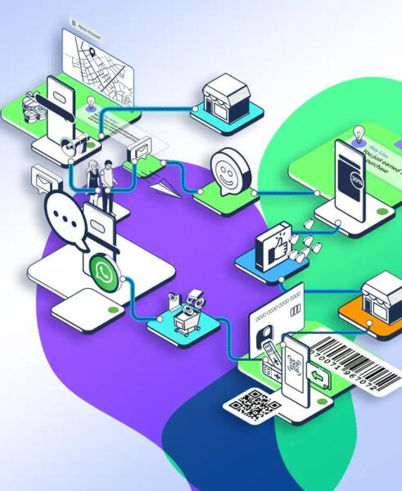
Today, your customers interact with your brand on multiple touchpoints: email, mobile, social networks, website, store... The challenge is to orchestrate your marketing automation scenarios across these different channels to create a smooth and coherent experience.
Concretely, the multichannel approach consists of using several communication channels in a complementary and coordinated way. Each channel has its specificities in terms of format, tone, reactivity.
By combining them intelligently, you can create journeys that adapt to your customers' preferences and behaviors.
For example, you can send an email to announce a promotion, then a mobile notification to remind of the offer's end, and finally an SMS to confirm the order.
The advantage of the multichannel approach is twofold:
- On one hand, it allows reinforcing the impact and memorization of your message by broadcasting it on different media.
- On the other hand, it offers more choice and flexibility to your customers by allowing them to interact with you on their preferred channel.
Some advice for building and deploying multichannel marketing automation scenarios:
- The prerequisite is customer knowledge. You need to know well the uses and expectations of your customers on each channel. This will allow you to adapt your messages and tone according to the context.
- You must also ensure the consistency of your communication, harmonizing the discourse across different channels, to avoid dissonance and strengthen brand recognition.
- To orchestrate your multichannel scenarios, you have an ally: automation. Implementing multichannel scenarios requires using marketing automation tools.
Key learnings
In the era of customer experience, these examples of marketing automation scenarios and their multichannel orchestration are your best allies for creating fluid and engaging journeys. Thanks to them, you deliver the right message, to the right person, at the right time, and on the right channel. It's the key to building lasting relationships and increasing customer lifetime value.
But to succeed with your scenarios, several ingredients are essential:
- First, a 360° customer knowledge derived from the collection and analysis of omnichannel data.
- Then, a tailor-made design and implementation that fit the specificities of your target and your offer.
- Finally, a logic of continuous improvement based on field feedback and the latest trends. Updating your scenarios is an ongoing process.
To help you in this approach, the Actito platform offers all the tools to create, automate, and monitor your cross-channel marketing scenarios intuitively. Thanks to its data-driven approach and advanced orchestration capabilities, it will be your partner in succeeding with your marketing strategy.