



Marketing targeting: mistakes that hurt your performance
26 November 2025
Marketing targeting: mistakes that hurt your performance
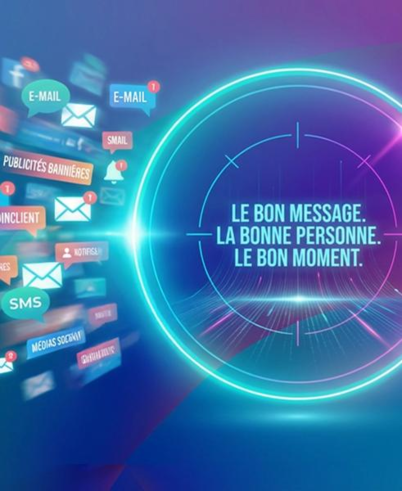
Consumers have never been more solicited. Between emails, notifications, texts, ads—every day they're exposed to dozens, if not hundreds, of marketing messages. Fatigue sets in, attention fragments, and it becomes difficult to be heard above all the noise.
This is where marketing targeting becomes essential. It's the art of speaking to the right person, at the right time, on the right channel, with the right message. In other words, communicating with precision.
Good marketing targeting doesn't just happen. It requires a reliable data foundation, tools capable of intelligently orchestrating your actions, and a deep understanding of your customers. Targeting is, after all, one of the main purposes of customer knowledge: understand better to target better.
In this article, we review the most common mistakes in marketing targeting—the ones that hurt performance—and show you how to avoid or overcome them.
Mistake #1 - Not fully leveraging customer data
First things first, let's quickly recap what marketing targeting really is. Targeting isn't simply extracting a contact list from a CRM or segmenting by age group. It's identifying, through data, the most relevant profiles to reach at a given moment, based on their behavior, context, and value to the business.
Marketing targeting therefore rests on one foundation: customer data.
Scattered data = fragmented customer view
In most organizations, customer data is still dispersed:
- Purchase history is in the ERP.
- Digital interactions are in analytics tools.
- Tickets and complaints are in customer service.
- Email campaigns are in the marketing platform.
Each of these pieces tells part of the customer's story, but none alone provides a complete view of the customer journey.
Let's take a concrete example.
If a customer bought a product yesterday, then receives a promotional email the next day for that same product, they perceive your brand as disconnected. But if your system automatically identifies their purchase and sends them relevant usage content or a smart cross-sell offer, they feel understood and supported.
The difference between these two scenarios? The quality of the data and the ability to activate it in real time—which are the prerequisites for relevant, and therefore effective, marketing targeting.
Discover how to unlock the power of your data through activation and visualization.
Cross-reference multiple data types for greater precision
High-performing marketing targeting doesn't rely on a single data source. It mobilizes several complementary dimensions by combining them:
- Transactional data, to know who buys what, when, and how often.
- Behavioral data, to track browsing, email opens, or campaign interactions.
- Attitudinal data, from surveys, feedback, or quizzes, which help understand deeper motivations.
- CRM and web analytics data, to connect the dots between channels and measure engagement over time.
From data collection to data unification
Collecting all this data isn't enough. You still need to centralize it, structure it, normalize it, and ensure its reliability.
That's the whole role of an engagement platform like Actito: unifying customer data from multiple sources to offer a 360° view that marketing teams can actually use.
Data unification is what allows you, for example, to:
- Automatically identify customers who've been inactive for several months.
- Spot disengagement signals before they turn into churn.
- Personalize your marketing campaigns based on recent behaviors.
- Track the performance of customer segments over time.
It's a virtuous cycle. The more you leverage your data, the more refined your targeting becomes, and the more your customers perceive relevant communications. Not fully leveraging customer data means depriving yourself of the essential fuel for your marketing.
Good marketing targeting starts with a deep understanding of your customers. And that understanding is only possible if your data is accessible, reliable, and actionable within a unified ecosystem.
Mistake #2 - Stopping at overly basic segmentation
Marketing targeting relies on segmentation. Targeting a marketing operation means selecting the customer segment you're going to activate.
For a long time, marketing segmentation was limited to a few simple criteria: age, gender, location, or socio-professional category. These approaches had their uses, but today, they're no longer enough.
Consumers expect communications that reflect their needs, their usage patterns, and their life context—not just their demographic profile. Knowing your customers' age won't tell you when they're ready to buy, or what they really expect from your brand.
From static segmentation to dynamic segmentation
Modern marketing targeting is no longer built on fixed segments, but on evolving profiles that adapt in real time to observed behaviors. That's where the whole difference lies between classic segmentation and "data-driven" segmentation, between static segmentation and dynamic segmentation.
Again, let's take a simple, concrete example:
- You have two customers, both 35 years old, both living in Lyon.
- One just abandoned their cart on your site.
- The other just opened a promotional email and made a purchase.
Behind identical socio-demographic profiles, the behaviors are completely different. The first needs a personalized follow-up, the second a thank-you message or usage content.
If your segments don't account for these differences, you're missing the mark.
New segmentation levers: behavior, value, and timing
There are 3 dimensions that are transforming how we segment today:
- Behavior: purchase frequency, campaign responsiveness, products viewed, use of digital channels, etc. We're trying to understand what the customer does, not just who they are.
- Value: economic potential, loyalty, long-term profitability, lifetime value, etc. We're trying to focus marketing efforts on the highest-contributing segments.
- Timing: where is the customer in their lifecycle or journey. The goal is now to activate the right message at the right moment in the customer journey (onboarding, repurchase, disengagement, etc.).
Taking these three dimensions into account is what allows you to move toward more effective and "timely" marketing targeting.
Dynamic segmentation relies on marketing technology (MarTech)
Advanced, dynamic segmentation can no longer be managed manually in Excel files. By definition. It's managed in modern tools like Customer Engagement Platforms (CEP), which automate the creation and updating of segments based on customers' actual behaviors.
On a platform like Actito, you can:
- Create segments combining dozens of behavioral or transactional criteria.
- Update them in real time as soon as data changes (new purchase, click, open, unsubscribe...).
- Automatically trigger marketing actions tailored to each segment.
Modern marketing tools make possible what was once just a dream or a promise. And the shift to dynamic segmentation changes everything. Customers are no longer "classified" once and for all: they move from one segment to another based on their engagement.
Mistake #3 - Confusing targeting with personalization
An effective way to improve the performance of your marketing actions is to combine targeting and personalization (or even hyper-personalization).
Except that many companies confuse the two and think they're personalizing their campaigns when they're really just...targeting well.
They send their messages to the right audience, but without adapting the content, tone, or offer to each profile.
It's important to understand that targeting and personalization don't follow the same logic:
- Targeting is about choosing who to reach.
- Personalization is about adapting what you say and how you say it to each recipient.
Targeting is choosing. Personalizing is understanding.
Targeting allows you to focus your efforts on the right segments: your loyal customers, your new subscribers, your at-risk buyers, etc.
Personalization goes further. It transforms that segmentation into truly differentiating experiences, capable of creating emotional connection and strengthening customer relationships.
Let's take another example. You identify a segment of customers who've been inactive for three months: that's targeting. But if you send them a message that recalls their last purchase, offers a discount on a complementary product, and adopts a reassuring tone, you're personalizing.
Personalization isn't just about inserting a first name in an email—it's also and especially about adapting the value proposition to the customer's reality: their recent behaviors, preferences, history, or engagement level.
Toward intelligent, 1-to-1 personalization
Personalization at scale is only possible if it's based on reliable data and tools capable of automating scenarios. We're back to the starting point: everything starts with data and your ability to leverage it with the right tools.
This is once again the role of a Customer Engagement Platform like Actito: to combine targeting, personalization, and orchestration in a single environment.
With Actito, you can: Check the status of the Actito platform at any time.
- Adapt email content based on recently viewed products.
- Adjust the contact channel based on customer responsiveness (email, SMS, push notification).
- Personalize sending frequency to avoid over-solicitation.
- Automatically recommend the most relevant product or service.
- Etc.
This is what we call 1-to-1 marketing or individual marketing.
Effective marketing targeting is one that combines targeting and personalization. It's the combination of both that creates performance: targeting defines the who, personalization refines the what and the how.
Mistake #4 - Ignoring timing and context
A relevant message sent at the wrong time is still a failed message. This is perhaps one of the most common mistakes in marketing: believing that good content alone is enough to capture attention. In reality, the "when" and the "how" matter as much as the "what".
The right message, at the right time...and in the right context
Targeting the right audience is a first step, but it's not enough. To be truly relevant, a message must fit into the moment your customer is experiencing.
Their journey, recent intentions, history, engagement level, or even current pain points strongly influence how they'll receive your communication.
That's why we often say that context is just as important as content:
- A customer who just made a purchase, for example, primarily expects a thank-you message, support, reassurance, or usage advice. Sending them a new promotion within hours can create dissonance or even frustration.
- A prospect who downloads a guide or subscribes to a newsletter shows emerging interest: they're not ready to buy yet, but they're ready to learn or compare. An overly commercial message might rush them.
So, relevance isn't just about "who". It also depends on "when" and "in what context".
Combining marketing calendar and automated scenarios
The marketing calendar remains essential. It structures your commercial highlights, ensures regular presence, and provides the consistency your brand needs.
It's your editorial backbone: product launches, seasonal campaigns, newsletters—all these planned touchpoints contribute to the stability of your marketing system.
But a calendar can't anticipate everything. It doesn't know if a customer just unsubscribed, made an unexpected purchase, or returned to your site after several weeks of absence. It can't guess when a prospect crosses a threshold in their purchase intent.
This is where automated scenarios take over. They complement scheduled campaigns by reacting to concrete customer signals: a visit, a click, an add to cart, prolonged inactivity, a birthday, a segment change, etc.
By combining campaign logic with scenario logic, based on marketing automation, you get a system that remains coherent while becoming much more responsive. Your messages are no longer sent "because they were scheduled," but "because the customer did something that makes them relevant".
Key takeaways
In summary:
- Fully leverage customer data: without a solid foundation, no targeting can be relevant.
- Go beyond fixed segmentation, by integrating behaviors and context.
- Combine targeting and personalization for truly engaging communications.
- Think timing and context, by triggering your marketing actions at the right moment.
Your turn!