



Why and how should you develop a 360° marketing strategy?
3 December 2021
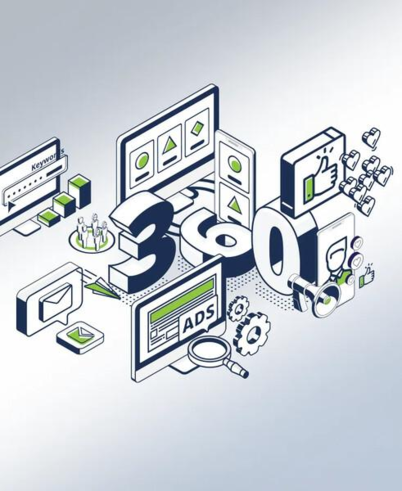
Why and how should you develop a 360° marketing strategy?
Is 360° marketing a new concept?
No. 360° marketing is a term that emerged a few years ago but is currently generating a lot of buzz. There are several definitions of 360° marketing, but they all mean the same thing.
In this article, we’ll explain what 360° marketing is and how to implement your own 360° marketing strategy.
What is 360° marketing?
360° marketing is a holistic approach to communication that combines a wide range of media (both online and offline) to meet all the expectations and needs of your prospects or customers.
By adopting a 360° marketing strategy, you utilise all available communication channels: mobile, websites, television, adverts, newsletters…
360° marketing enables you to convey a single, unified message across all touchpoints with your target audience and via their preferred channels. Very often, a good 360° marketing strategy is one you aren’t even aware of.
Who hasn’t seen a billboard advert for the very latest, state-of-the-art smartphone, followed by an advert for that same smartphone; then an advert in your Facebook news feed; and finally a letter with a voucher for that phone in your letterbox?
The question that then arises is: what is the difference between 360° marketing and traditional marketing?
That’s what we’ll try to answer in the next section.
What is the difference between 360° marketing and traditional marketing?
It all comes down to data! 360° marketing uses data from all available sources to better personalise the customer relationship and ensure brand messages are consistent across all channels and touchpoints.
In contrast, traditional marketing focuses on a single source in an attempt to create a message targeted at that specific source.
For example, in a traditional marketing approach, the social media manager will focus on data from social media whilst ignoring all other sources.
Consequently, one of the most significant differences between 360° marketing and traditional marketing is the centralisation of data collected from these various sources.
This is known as the 360° customer view. The 360° customer view refers to having all customer information consolidated within a single tool. Nowadays, it is very easy to collect data on your customers. Ultimately, the most complicated part is managing that data, ensuring its quality and processing it.
But how does the process of collecting information work?
Firstly, data is collected by linking several communication channels to a single software programme. This is done, for example, using a marketing activation tool such as Actito.
Centralising your data ensures that it is authentic and secure.
Once your data is centralised, you can implement a 360° marketing strategy and start targeting your customers effectively and optimising your messages.
9 key elements of a 360° marketing campaign
If you’re still here, it’s because you want to understand how to develop a 360° marketing strategy.
Don’t worry, we’ll guide you through the basics of a comprehensive and successful marketing strategy.
1. An effective website

Your website is your shop window. Today, 88 per cent of French internet users shop online. Your site must therefore be user-friendly, well-designed and convey an image of authority and trust.
An effective website means that it must comply with Google’s guidelines, known as ‘Core Web Vitals’. This means you must ensure your website is responsive (i.e. optimised for mobile devices) and meets Google’s standards for loading times.
2. A good SEO strategy
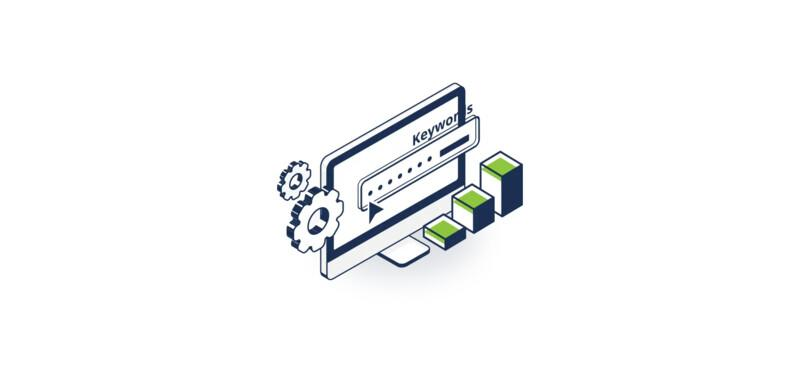
SEO, or search engine optimisation, ensures your website is visible and ranks highly in search results. SEO is a strategy that takes time, but when done properly, it will enable you to attract free, high-quality organic traffic. It is therefore an investment in time rather than money.
3. An SEA strategy

Implementing an SEA strategy also helps to generate traffic. The results are more immediate but more short-term than with SEO. This form of advertising will ensure you appear in a prominent position for strategic search queries.
To ensure your SEA strategy is successful, you must carefully select keywords that match the customer’s intent, are not too competitive, and have a good monthly search volume; these must be constantly monitored and reassessed to maximise results. Furthermore, you need to create robust and relevant landing pages and compelling ad copy.
4. Email marketing

Since its inception in the 1970s, through the emergence of webmail and its widespread adoption, email has been a veteran of the communications world… Historic, but by no means outdated! Omnipresent in our daily lives, it is a widely used global communication tool.
The secret to its success? Undoubtedly the personal, intimate nature of the relationship it forges with the recipient. Much like its predecessor, the paper letter, email is addressed to a specific individual. At the heart of customer relations, it is the preferred channel for engaging and building loyalty within a community.
5. Social media

Having a presence on social media is very important. It gives you more opportunities to connect with individual consumers. To achieve this, your activities must be consistent with the image you’re trying to project and the message you wish to convey through your other marketing initiatives.
Social media is active 24 hours a day and allows you to monitor your campaigns and boost their effectiveness in order to maximise your turnover.
6. Content marketing

Content marketing is very much in vogue at the moment, particularly in B2B. This strategy aims to build brand awareness and credibility by creating and distributing high-quality content for your audience, whilst also satisfying search engines.
It’s worth noting that content marketing isn’t limited to blog posts alone. It’s important to diversify the types of content you produce, such as videos, infographics, e-books, etc.
7. In-store presence

In-store marketing remains a key component of a 360° marketing campaign for most businesses. What you say offline and what you display in your shop must be consistent with what you say in your digital marketing.
8. Influencer marketing
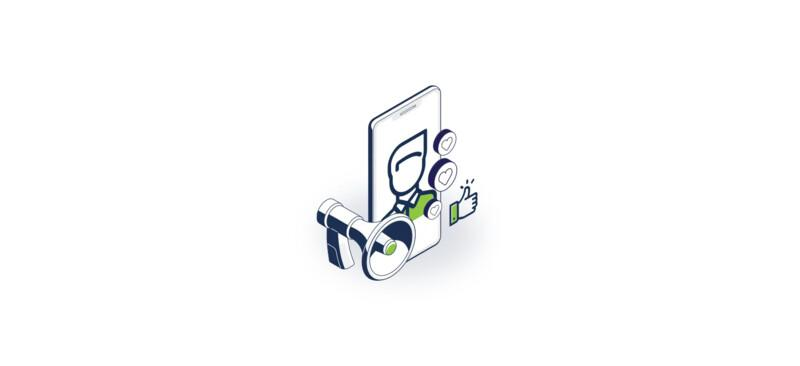
Influencer marketing is a strategy that aims to harness the power of influencers’ recommendations or endorsements. It is important not to confuse brand ambassadors – who are satisfied customers recommending a brand to their friends and family – with influencers, who are paid to recommend a brand to their community.
9. Traditional advertising

Traditional advertising is a more intrusive strategy that reaches a much wider audience, through formats such as newspapers, billboards, radio and television. The drawbacks of this strategy include the cost, less precise targeting and a lack of interaction compared to digital advertising.
Conclusion
In this article, we have seen that a 360° marketing strategy is a comprehensive approach that encompasses multiple communication channels. Adopting such a strategy will therefore enable you to reach your potential customers with the right message at the right time and in the right place.
Using a customer activation solution such as Actito is a key component in the success of a 360° marketing strategy.