



Customer Engagement Platform (CEP): The future of CRM and omnichannel orchestration
21 March 2025
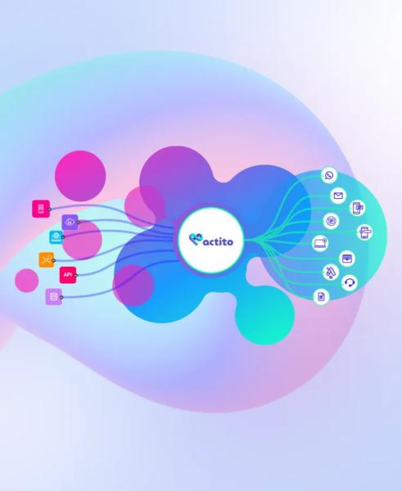
Customer Engagement Platform (CEP): The future of CRM and omnichannel orchestration
The digital era has revolutionized customer relationships. Today, consumers are no longer satisfied with traditional interactions: they demand a seamless, personalized, and omnichannel experience. A message that's too generic, a poorly utilized channel, or communication disconnected from their expectations, and engagement collapses. Faced with these new challenges, companies must go far beyond traditional CRMs.
This is where Customer Engagement Platforms (CEP) come in. These hybrid solutions, at the intersection of CRMs, CDPs, and orchestration tools, represent the new generation of marketing platforms. They are emerging in a constantly evolving martech landscape, where companies seek to streamline their technology stacks while improving customer engagement. CEPs allow for more consistent and responsive management of the customer experience, offering a more integrated and holistic approach to customer relationship management.
From data collection to interaction personalization and journey automation, CEPs are becoming a central lever for maximizing CRM quality and performance. Let's explore together how Customer Engagement Platforms are redefining customer relationship standards.
What is a Customer Engagement Platform (CEP)?
Definition and basic concept
A Customer Engagement Platform (CEP) is a software solution that allows companies to manage, analyze, and optimize customer engagement at scale. Its goal is to offer a personalized customer experience, contextualized and consistent at every touchpoint - and this by relying on a fine-grained understanding of each individual.
Customer data is the fuel of CEPs. A CEP centralizes customer data from multiple sources (CRM, website, mobile applications, social networks, etc.) within what is called a single (customer) repository.
It enriches and unifies this data to build a 360° view of each profile. From this "Single Customer View," advanced segmentation and analysis capabilities allow for defining ultra-personalized customer journeys.
Finally, CEPs integrate delivery functionalities, as we'll see in a moment. As a "Data Management" tool, CEPs also serve to orchestrate and disseminate adapted communications across all interaction channels, at the right time and in the right format.
The CEP as an evolution of traditional CRM
While the concept may seem close to CRM (Customer Relationship Management) solutions, the CEP actually goes much further.
CRMs generally focus on managing sales, marketing, and customer service interactions. Customer Engagement Platforms, on the other hand, address the entire customer journey from end to end. They integrate advanced data management and activation capabilities typically found in CDPs (Customer Data Platform).
A Customer Engagement Platform (CEP) is a solution that aims to unify advanced data management, customer orchestration, and omnichannel execution capabilities within a single platform. It aims to go beyond the simple addition of customer data management, CRM, and Marketing Automation functionalities by offering an integrated approach to managing the entire customer journey.
However, it's important to note that not all CEPs offer the same level of native integration. The most advanced ones offer a complete proprietary infrastructure, including their own IPs for email sending, native SDKs for mobile, and direct integrations with major digital and social channels. Others may rely on third-party integrations for certain channels while offering a unified interface.
The common goal of CEPs, regardless of their approach, is to provide companies with a centralized environment for collecting and analyzing customer data, orchestrating personalized journeys, and executing coherent campaigns across multiple touchpoints.
The Importance of omnichannel orchestration
The great contribution of CEPs lies in their omnichannel orchestration capabilities. In a world where touchpoints are multiplying (website, mobile, email, social networks, chat, points of sale...), the challenge for companies is to know how to engage in dialogue with the customer on the right channel at the right time.
Thanks to their native functionalities for defining journeys and engagement rules, CEPs allow for finely automating and coordinating interactions across all channels. The challenge? Creating smooth and personalized experiences, where messages delivered on each touchpoint make sense with each other.
The key components of an effective CEP
The foundation of a Customer Engagement Platform rests on advanced customer data management functionalities.
This involves:
- Ready-to-use native connectors to collect data from all your data sources: CRM, website, mobile applications, information systems, social networks, etc.
- Real-time data integration capabilities via APIs.
- Data cleaning, deduplication, and matching tools to ensure a unique and reliable view of each customer.
- Customizable data models to adapt to the business specificities of each company.
These Data Management capabilities are what make the 360° customer view and all derived use cases possible.
Advanced segmentation and personalization capabilities
Once this unified customer view is obtained, a CEP must allow easy exploitation of this data to finely adapt communications.
This is where the following come into play:
- Advanced segmentation functionalities. A Customer Engagement Platform offers advanced segmentation tools to create precise audiences based on multiple criteria (demographic, behavioral, transactional data, etc.). Decision trees allow combining these criteria according to business logic - the goal being to constitute micro-segments to best target communications.
The integration of artificial intelligence allows going even further, generating predictive segments based on machine learning models.
- Enrichment capabilities through scoring. Thanks to AI, CEPs can automatically calculate engagement scores, purchase propensity, or churn risk for each customer. These scores, updated in real-time, enrich customer profiles and further refine segmentation and personalization.
- Dynamic personalization functionalities. A Customer Engagement Platform doesn't just send the same message to an entire segment. It exploits the richness of customer profiles, including AI-generated scores, to finely adapt the content and tone of messages according to each individual. This personalization can extend to the choice of channel, sending time, and even predicting the content most likely to generate engagement.
Advanced data fusion capabilities
A major asset of modern CEPs is their ability to merge 'cold' CRM data (demographic information, purchase history, etc.) with 'hot' behavioral data (website navigation, email interactions, etc.) in real-time. This fusion allows for a more complete and up-to-date understanding of the customer, paving the way for:
- Dynamic and more precise segmentation: segments can be instantly updated based on recent customer behaviors.
- Contextual personalization: messages can be adapted not only to the customer's overall profile but also to their immediate behavior.
- Real-time activation: the platform can trigger relevant actions (email sending, push notification, etc.) based on a combination of historical data and real-time behaviors.
This ability to simultaneously exploit 'cold' and 'hot' data is a key differentiator of CEPs compared to traditional marketing solutions, allowing for much more relevant and effective customer interactions.
Native omnichannel orchestration
As mentioned earlier, one of the main assets of a CEP lies in its ability to orchestrate communications across multiple channels in an integrated way. Customer Engagement Platforms offer a complete and unified solution for managing the entire customer engagement cycle. They natively integrate advanced capabilities in data management, analysis, segmentation, customer orchestration, and omnichannel execution.
A Customer Engagement Platform worthy of the name natively integrates:
- A cross-channel journey editor to visually define complex engagement scenarios. If you use a marketing automation platform, you are familiar with these "Journey Building" functionalities.
- A rules engine to automate the triggering of actions according to each customer's profile and behavior.
- Connectors with the main upstream data sources (CRM, website, mobile applications, information systems, etc.) for efficient collection and integration of customer data.
- A/B testing and optimization functionalities to continuously adjust journeys.
A modern and intuitive user interface
Last but not least, a Customer Engagement Platform must offer a simple and intuitive interface to allow for quick adoption by business teams. CEPs, like CDPs, aim at democratizing the exploitation of customer data.
This translates into:
- A clean design and optimized workflows to offer the smoothest possible user experience.
- Customizable dashboards with key performance indicators to pilot activity in real-time.
- Advanced reporting functionalities to measure the result of actions.
- Configurable user roles and access rights.
The integrated delivery capabilities of a Customer Engagement Platform
Beyond data management and orchestration functionalities, the most advanced CEPs on the market also integrate delivery capabilities on key engagement channels.
These advanced Customer Engagement Platforms (of which Actito is part) don't just orchestrate journeys, they manage channels.
Email Marketing
Email remains marketers' preferred channel for maintaining customer relationships.
Advanced CEPs integrate email functionalities:
- A responsive template builder.
- Dynamic personalization functionalities to finely adapt the content of each email.
- Email rendering tests to ensure good deliverability of messages on all email clients and devices.
- Detailed performance indicators (open rate, clicks, reactivity, unsubscribes) to measure engagement.
SMS and Push Notifications
To reach customers on mobile, SMS and push notifications are channels not to be neglected.
A Customer Engagement Platform allows exploiting them just as easily as email with:
- A dedicated editor.
- The ability to personalize the content and sender of messages.
- Real-time or scheduled sending capabilities according to each customer's preferences.
- Tracking and reporting tools to measure performance and optimize future campaigns.
In-app Messaging
Another high-potential channel: messaging integrated into applications and websites. Advanced CEPs today allow for easily creating in-app messages and conversational chatbots to interact directly with customers in the interfaces they use daily.
For example:
- Personalized welcome and onboarding messages to engage new users.
- Content or product suggestions adapted to each user's navigation.
- Automated responses to the most frequent questions via AI-powered chatbots.
- Contextual solicitations to gather information (customer reviews, surveys, feedback requests).
Other engagement channels
The strength of a Customer Engagement Platform is also to allow easy integration of new channels on the fly.
Among the other channels supported by the most advanced platforms, we can mention:
- Social networks.
- Voice assistants and voice search.
- Connected objects.
- Web-to-store and web-to-mail.
Customer Engagement Platforms: An open and evolving technology
Beyond their own internal functional capabilities, modern CEPs must also be open and compatible with a wide technological ecosystem to integrate harmoniously into companies' information systems.
The CEP: A platform compatible with your Data Platform
The first requirement concerns compatibility with the main cloud Data Platforms on the market such as Snowflake, Google BigQuery, Microsoft Azure or Databricks. The challenge is to be able to easily connect to these platforms to enrich customer profiles with advanced data (behavioral, transactional, predictive data...) extracted from large volumes (data lake).
This integration also allows reimporting engagement data collected by the Customer Engagement Platform (email opens, clicks, in-app interactions...) into the data warehouse to feed advanced attribution models or machine learning algorithms, for example.
Managing NoSQL database models
Another important criterion: the flexibility of your Customer Engagement Platform's data models.
With the diversification of data sources and formats, classic relational schemas show their limits. CEPs must therefore rely on NoSQL databases (MongoDB, Cassandra...) capable of ingesting unstructured or semi-structured data in masses and in real-time.
This agility in data structuring is essential for rapidly integrating new channels or use cases without heavy redesign. It also allows managing attributes specific to certain profiles or segments, where rigid models impose a unique framework.
The latest generation CEPs are designed around this "schemaless" logic to bring maximum flexibility in data collection and exploitation.
An All-in-One but open CEP
A final key point lies in the platform's level of openness. Although the CEP is an all-in-one solution, it must remain open and capable of integrating with other components of your technological ecosystem.
The idea is that the Customer Engagement Platform should not be a closed and compartmentalized system but rather an open technological brick capable of integrating and exchanging with all other components of your technological ecosystem: analytics solutions, data visualization, API management...
This logic of modular and interoperable architecture (API first) is key to building agile "best of breed" stacks, where each application brick communicates and complements each other. This allows companies to choose the best solutions on the market for each link in the chain and to evolve their information system through successive iterations, without depending on a single supplier. It's also a guarantee of sustainability in a market where solutions are constantly evolving...
The advantages of a Customer Engagement Platform for customer engagement
Everything said above about the characteristics of CEPs serves a main objective, anchored in the very name of this new family of platforms: improving Customer Engagement.
Here's how.
Consistent messages across all channels
First benefit: the coherence of messages and customer experiences. Thanks to centralized orchestration and a 360° view of the customer, CEPs ensure perfect harmonization of touchpoints, which allows offering your customers a smooth experience across all channels.
With a Customer Engagement Platform, omnichannel becomes a reality.
An enriched and personalized customer experience
This coherence also reinforces the relevance and personalization of messages. By exploiting each customer's behavioral and transactional data in real-time, CEPs allow for continuously refining communications.
With content and offers increasingly adapted to interests and context, the entire customer journey gains in relevance and added value.
Optimized marketing campaigns
Customer Engagement Platforms group the execution of marketing campaigns and the analysis of their performance within the same platform, which in reality greatly facilitates continuous improvement work. Reporting and A/B tests offer marketers the possibility to adjust their strategies almost in real-time based on customer reactions.
An increase in customer retention & loyalty
All these combined benefits ultimately lead to increased customer loyalty. When a customer receives a relevant offer at the right time, they feel listened to and valued, which encourages them to continue the relationship and trust the brand in the long term.
Conversely, a customer tired of receiving irrelevant or redundant messages will quickly go to the competition. It's indeed the brand's ability to continuously offer enriched and differentiating experiences that will make the difference in a hyper-competitive world.
In this sense, CEPs act as a powerful lever for customer satisfaction and retention. They allow animating the relationship over time with targeted and... engaging communications.
Tangible business benefits
Beyond improving customer engagement, CEPs offer concrete advantages for companies:
- Productivity gains: By centralizing tools and data, marketing teams spend less time juggling between different platforms, thus accelerating campaign creation and deployment.
- Increased team autonomy: Intuitive interfaces and no-code capabilities allow marketers to manage complex tasks themselves, reducing dependence on IT teams.
- Better ROI of campaigns: Thanks to finer personalization and real-time activation, campaigns gain in relevance and efficiency, thus improving their return on investment.
- Reduction of technological costs: By replacing several tools with a unified platform, companies can make substantial savings on their infrastructure costs and software licenses.
- Agility and speed of execution: The ability to quickly adjust strategies based on real-time data allows companies to remain agile in the face of market changes.
What are the criteria to consider when choosing your Customer Engagement Platform?
With the multiplication of Customer Engagement Platform solutions on the market (whether they define themselves as such or not), it's not always easy to find your way. To make the right choice, several criteria should be taken into account.
Here are the 4 main ones.
Criterion #1: Alignment with your needs & target use cases
The first step is to clearly clarify your needs and objectives:
- What are the priority use cases you want to address (loyalty, acquisition, reactivation...)?
- What are the channels on which you want to communicate as a priority?
- What is the volume and diversity of data to be integrated?
- What are the resources and skills available internally to manage the platform?
You must structure the expression of your need in a specification before even consulting editors.
Criterion #2: Compatibility with your existing systems
Another key point to check is the ability of the Customer Engagement Platform to integrate with your existing technological ecosystem.
The platform must be able to easily connect to your current data sources (CRM, data warehouse, business applications...) but also to your marketing automation, customer service, or analytics tools.
This integration must be both simple to implement (ready-to-use connectors) and flexible enough to adapt to your specificities (customizable APIs). Don't hesitate to challenge editors on these interoperability aspects which are absolutely key!
Criterion #3: Scalability and flexibility of the platform
Beyond your immediate needs, you must project yourself into the future. Your Customer Engagement Platform must be able to absorb growing volumes of data and interactions without impacting performance.
It must also be flexible enough to integrate new channels, new data sources, or new use cases on the fly.
In other words, \*\*your CEP must be able to evolve at the pace of your
business and ambitions\\. This is why it's important to favor platforms designed with an open and modular logic (like Actito).
Criterion #4: The quality of support and guidance offered by the editor
Finally, a last criterion not to be neglected is the quality of support and guidance proposed by the editor.
Implementing a CEP is a strategic project that requires a true long-term partnership. Beyond purely technical aspects, evaluate the editor's ability to understand your business challenges, to challenge you on best practices, and to support you in change management.
Of course, other criteria will come into play such as functionalities, pricing, or customer references. But by keeping in mind these four pillars - adequacy to needs, technological integration, scalability, and support - you give yourself every chance of finding the Customer Engagement Platform that suits you.
Key Learnings
Customer Engagement Platforms (CEP) form a new generation of platforms, widely adopted in the United States but still emerging in Europe.
They will impose themselves in the coming months and years, as they respond to an essential need of companies: to better activate and engage their customers in an omnichannel world, by intelligently exploiting data. In a way, CEPs represent the natural evolution of Customer Data Platforms (CDP), by directly integrating orchestration capabilities and customer journey activation.
Here are the key points to remember:
- CEPs go beyond CDPs by centralizing customer data while offering advanced tools to activate this data effectively.
- Customer Engagement Platforms offer advanced omnichannel orchestration capabilities, to finally make possible a smooth and coherent management of interactions across all channels.
- CEPs unify the customer relationship by connecting CRM, marketing automation, and journey management into a single platform.
- CEPs optimize customer engagement in real-time, thanks to native segmentation, analysis, and A/B testing functionalities.
- CEPs constitute a strategic lever for loyalty, as they finely personalize interactions according to customers' behaviors and preferences.
CEPs are not a simple addition to existing marketing tools: they transform the way companies exploit their data to interact with their customers. They embody the future of customer relationships, and companies that adopt them today are taking a head start.